Close-up
Most of the shots on television and in movies are people’s heads. Not full bodies—just heads-and-shoulders. Why is this? Partly, it’s because humans are conditioned to look at faces. That’s where we get cues about the other person’s attitude and feelings. So effective communication requires seeing faces.
In television, this varies with the type of show. Soap operas show faces a bit more, action dramas a bit less, but the principle remains. Even in a sport like American football, where player’s heads are covered by bulky helmets, TV producers desperately work to show viewers the faces of the players and coaches whenever possible.
This fixation on showing faces can reach a point of absurdity. For example, when TV crime dramas depict a SWAT team breaking in a house, the extras and low-paid actors wear protective helmets. The stars never wear helmets, even though they usually lead the charge. Curious.
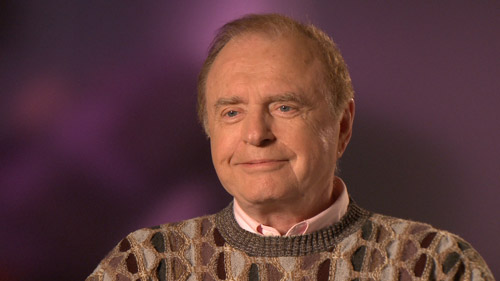
When filming people, the goal is to capture their emotional state. And the only way to do that is to get a shot of the person’s face filling up a significant portion of the screen. Professionals call these shots “close-ups.” Customarily, a close-up leaves a little bit of room above the person’s head (not too much!) and includes the entire face and shoulders down to about the armpit.
Why include the shoulders? Because if the shoulders are cropped out, all that remains is a floating “disembodied” head. It’s psychologically disturbing—that’s what early filmmakers discovered. Showing the shoulders implies that the subject actually has a body—even if we don’t see it.

ABOVE: “The “floating head” is a bit creepy. BELOW: Shoulders should be in most close-ups. And note the sliver of room above the head.

For any close-up shot, the emphasis should be on the subject, not the background. Thus the subject should be in sharp focus, while the background is slightly out of focus.
There are a number of ways to accomplish this, but the simplest is to move the subject away from the background. Don’t shoot a subject up against a wall.
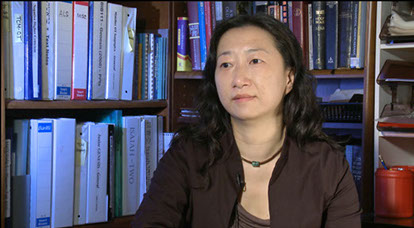
Consider the top example on this page. The woman is so close to the background, viewers could actually can read the titles of the books in her office. It’s distracting.
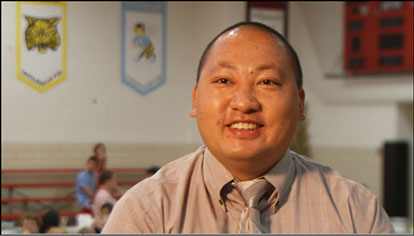
In the lower example, the man has been positioned far from the background; thus the background is out of focus. A viewer can see that he’s in some sort of gymnasium, which is good. But the background isn’t so sharp that it attracts your your attention.
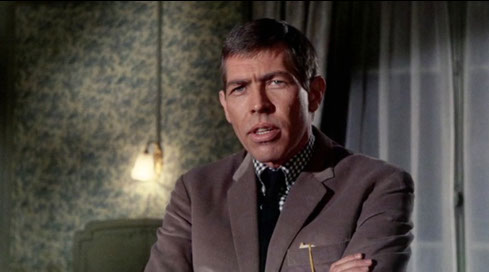
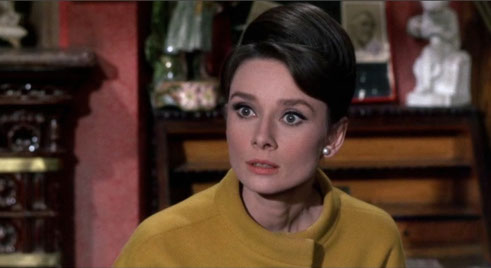
Good close-ups in documentaries are not really different from good close-ups in movies. In both cases, it is best to position the subject away from the background.
In the two examples on the right, the subjects are 8+ feet from the background, so the background is slightly out of focus—which keeps the viewer’s attention on the actor.
The Close Up – Backgrounds
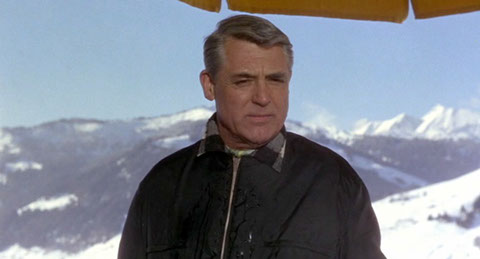
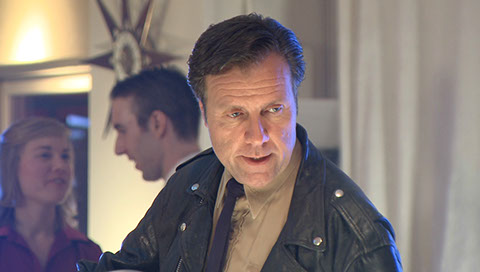
While it’s generally good to position the subject so the background is out of focus, the background is an important part of the close-up shot. In most cases, it helps tell part of the story—giving some context to the subject.
In the top shot on the right, the people in the background imply it’s a public place, perhaps a bar or restaurant. And the 1950s clock gives viewers a sense of the time period.
In the lower shot, the mountains immediately give the viewer a sense of the location.
In both cases, the backgrounds don’t distract, but they do provide a bit of context.
The Profile
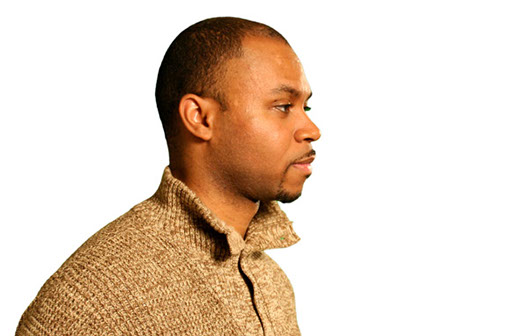
An important point to remember when shooting close-ups is to try to avoid profiles. The simplest way to remember this is to make sure both of the subject’s eyes are visible. If only one eye is visible, it’s a profile.